Posts

Showing posts with the label AMI Injury Prevention

Kinesiophobia and the AMI: How Can the AMI Help Reassure Patients?

Kinesiophobia and the AMI Previously on this blog, we have discussed the importance of the TSK-11 and patient-reported outcomes (PROM). In this blog post, three crucial questions were answered:  What is the TSK-11?  Why is this PROM so important in ACL Return to Play assessments? How does the TSK-11 complement dorsaVi’s AMI Assessment?   The post went on to outline the  symbiotic relationship shared between the TSK-11 and the AMI: if an athlete scores poorly on their TSK-11, they can be assessed under an AMI assessment. The AMI test results will then reflect whether an athlete is fearful of weight-bearing as the Single Leg tests can reveal apprehension in physically using their previously injured leg.  This is a crucial point, however, the AMI offers another point of reassurance in regards to an athlete and kinesiophobia: the ability for the athlete to see the results and movement improvement for themselves.    This is a point best articulated in the q...
Gareth Ziyambi: Using the dorsaVi sensors on the GB Diving Team

Gareth Ziyambi and dorsaVi   DorsaVi had the opportunity to sit down with  Gareth Ziyambi,  Physiotherapist for UK Swimming and Diving and  the Clinic Director & Principal Physiotherapist at A2Z Elite Health & Performance in London, UK, for a fascinating discussion about his use of the dorsaVi wearable sensors from the Olympics to the Clinic. One aspect of the dorsaVi sensors that is hugely beneficial for clinicians and physiotherapists is its versatility. It can be used to assess football players, gymnasts and, in this instance, the Great British Olympic Diving Team.  Watch the short clip below  and learn how Gareth used the dorsaVi sensors with the divers. In this clip: Gareth discusses using the technology for the pre-season screening, repeating that process at key points through that season. Through the objective and easy-to-read data, Gareth was able to use it for performance markers. The reports also provided helpful return-to-play markers, wh...

AMI Tests: Why Is It Important to Measure the Speed of both Valgus and Varus?

  Why Is It Important to Measure the Speed of Valgus? The Athletic Movement Module (AMI) consists of wearable sensor technology that allows the clinician to obtain immediate, objective data on an athlete's core and lower limb function. As part of this, the technology records not only the amount of Valgus and Varus in actual degrees, but also the speed of both movements during the following tests:  Full squat test  Single-leg squat  Single-leg hop Single-leg hop plant  This is a crucial piece of information for a clinician to have access to and Doctor Trent Nessler  PT, MPT, DPT, and co-founder of the AMI, explains why this is. During a Webinar, our dorsaVi team were able to ask exactly why the speed of Valgus and Varus should be measured? And, why it is so important?  Ultimately, Trent sums up the importance of measuring the speed of both Valgus and Varus for an athlete through three crucial points:  Speed is a major factor in force. When you cont...

Looking At Ankle Dorsiflexion: Half Kneeling Closed Kinetic Chain Dorsiflexion Test

Image
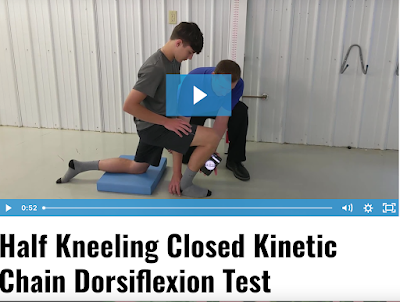
Half-Kneeling Closed Kinetic Chain Dorsiflexion Test Ankle Dorsiflexion is a crucial test for the Athletic Movement Index (AMI), this is because DorsaVi recognizes that when testing an athlete's lower extremities, the clinician is looking at the entire kinetic chain.  Previously, on this blog, we have shared our explanation as to  Why Is Ankle Dorsiflexion A Metric On The AMI?  Now we are following this article with a great post from Phil Plishy about the importance of the  Half-Kneeling Closed Kinetic Chain Dorsiflexion Test . Importantly, the post makes reference to how ankle sprains are one of the most prevalent lower extremity injuries in athletes. It goes on to explain how the open-chain position has been the most conventional assessment for Ankle Dorsiflexion but questions the reliability of this method.

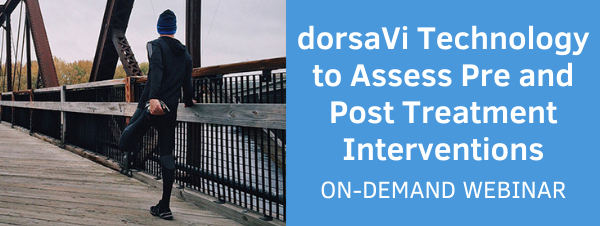
Check Out Our Webinar with Dr. Seun Adigun: How to Assess Pre and Post Treatment Interventions with dorsaVi Technology

Image
Webinar with Dr. Seun Adigun on how to Assess Pre and Post Treatment Intervention with DorsaVi Technology Our team had the opportunity to talk with Dr. Seun Adigun DC, owner of the Extra Wellness Center, to discuss the ways she utilizes dorsaVi technology as an assessment tool before and after therapeutic interventions.  To aid this discussion Dr. Seun Adigun references a fascinating case study about a Professional football player. For this study, dorsaVi's wearable sensor technology and the Hamstring module were used to assess the athlete prior to treatment. It was then used again post-intervention. In this webinar, Dr. Seun Adigun discusses the results and then further analyzes the compensation patterns exhibited by the athlete and the plan for treatment. DorsaVi's wearable sensor technology is an excellent tool for the assessment of an athlete pre and post-intervention of any type.  Click here to check out this great case study and learn some great clinical pearls!  F...

Check Out This Study: Lumbopelvic Postural Differences in Adolescent Idiopathic Scoliosis

Image
Lumbopelvic Postural Differences in Adolescent Idiopathic Scoliosis: A Pilot Study This study, from Gait & Posture , conducted by Matthew Jamison et al noted the currently unknown primary etiology of adolescent idiopathic scoliosis (AIS), but poor postural control of the spinal extensor musculature has been identified as an AIS risk factor.  The objective of this study was to answer the question "are there any determinable differences in lumbopelvic posture of range of motion between subjects with AIS and controls?" by using the ViMove dorsaVi sensor package .  This study consisted of 53 subjects aged between 11 and 17 years old:  27 of the subjects had AIS.  26 of the subjects were control.  All the subjects underwent a live assessment in order to understand the initial lumbopelvic (LP) range of motion (ROM) measurement. They were then monitored while completing normal activities of daily living (ADLs) for 12 hours. Finally, with an alpha level of 0.05, non...

Intepret and Relay the Results of the AMI: a great webinar for current users and new prospective users of the Athletic Movement Index

Interpret and Relay the Results of the AMI Join Trent Nessler, Shawna Jamison and Maka Lange as they discuss the specific tests and results of using the Athletic Movement Index (AM).  In this on-demand webinar, we discuss the specific tests and the results of the AMI along with the rationale behind some of the tests.  This webinar assists current users and informs prospective new clients on the AMI testing along with discussing the results of the AMI and how they translate into improving performance and preventing injury.  We take you through how to deliver results from the AMI to your athletes in a positive way sometimes on a potentially "not so positive test" as well as discussing interventions from the athlete.  Trent Nessler, Shawna Jamison and Maka Lange create positive phrasing and keywords for our users to take back for their next session.  In this webinar you will learn: How to deliver results from the AMI to your athletes in a positive way.  Ways t...

dorsaVi Interview with Mark Scarlato

Image
DorsaVi Interviews Mark Scarlato Our amazing team at dorsaVi had the opportunity to interview Mark Scarlato and ask him all about his experiences utilising dorsaVi wearable sensor technology at his clinic.  In this interview: Excitingly, Mark Scarlato also walks us through a case study he conducted with the dorsaVi technology.  we demonstrate how easy and effective the AMI module is for clinicians to utilise as a tool. We will also show you how valuable the AMI module is for assessing an athlete’s physical well-being: its actionable data is a crucial tool for creating, improving, and monitoring the success of an athlete’s training and physical therapy plan. Check out the full interview here!

Health Me Podcast: dorsaVi Discussing the AMI (Listen to the Podcast Here!)

Image
The Health Me Podcast hosted by Michael Swienton interviews Joanna Goldin from dorsaVi Recently our dosaVi Head of Clinical Sales, Joanna Goldin, PT, was invited to speak on the Health Me Podcast, hosted by Michael Swienton, DPT, CSCS. In the episode, they covered wearable sensor technology in the realm of performance and recovery especially related to the dorsaVi technology. dorsaVi has been the leader in the space for many years and Joanna was able to share everything she has experienced with the technology.  The podcast covered the following topics:  dorsaVi Origins  Sensor Technology in the realm of Physical Therapy  Clinical Use  Language and Communcation  Testing with dorsaVi Future of Wearable Technology  AND MUCH MORE... Listen to the Podcast Here! If you would like to learn more about the AMI and utilizing our amazing technology, watch our on-demand webinar here  and learn how the dorsaVi AMI Module can help your athlete on the road to ...

New Case Study: Young Baseball Catcher with Low Back Pain

Image
We are very excited to share with you  our new AMI case study .  Scroll down to read all about  how DorsaVi’s AMI Module was used to help explain the back pain of a baseball athlete and create a treatment plan to help relieve the plan. The brochure will explain how DorsaVi’s AMI Module and wearable sensor technology was used to assess the athlete’s movements, explain the presence of low back pain, and how it is attributed to certain repetitive manoeuvres of an athlete in the sport of baseball.  We will walk you through the results of the athlete’s AMI assessment and explain how the AMI data and results were used to create a pain-free physical therapy regime and subsequently improve his performance in baseball. In this case study, we demonstrate how easy and effective the AMI module is for clinicians to utilise as a tool. It also shows how valuable the AMI module is for assessing an athlete’s physical well-being: its actionable data is a crucial tool for creating, imp...

Why Gareth Ziyambi Adopted DorsaVi Technology into His Clinic?

Why Choose to Adopt DorsaVi Technology into Your Practice? When debating about whether or not to adopt dorsaVi wearable sensor technology into their practice, customers regularly focus on three key factors of the technology: its portability, versatility and reliability. Can dorsaVi provide you with all three things?  To answer this question, we thought we would share with you the explanation Gareth Ziyambi offered when we asked him why he chose to adopt dorsaVi's wearable technology into his practice.  Gareth Ziyambi is a Physiotherapist and Clinic Director & Principal Physiotherapist at A2Z Elite Health & Performance in London, UK as well as the Physiotherapist for UK Swimming and Diving. He has represented both his native Zimbabwe and Great Britain at 5 Olympic Games as a Physiotherapist.  When answering this question, Gareth outlined what key qualities he was looking for in a product before going on to discuss how dorsaVi's technology was able to tick each of ...

Interview with Gareth Ziyambi: From the Clinic to the Olympics

Image
From the Clinic to the Olympics: Interview with Gareth Ziyambi Watch our interview with Physiotherapist Gareth Zimyambi. Gareth is a Physiotherapist for UK Swimming and Diving and he talks about how he uses our dorsaVi technology from the Clinic to the Olympics. Gareth is the Clinic Director & Principal Physiotherapist at A2Z Elite Health & Performance in London, UK as well as the Physiotherapist for UK Swimming and Diving.  In this interview, Gareth discusses:  His role with the UK diving team at the 2021 Olympics. How using dosraVi wearable sensor technology helped with his assessments and treatments. How he uses dorsaVi technology in his day to day Physical Therapy practice.  And, specific case studies of patients assessed with dorsaVi technology. Watch the Interview Here

Interview with Gary Vitti: Former Head Athletic Trainer of the Los Angeles Lakers and DorsaVi technology

Image
  How does the legendary Gary Vitti use dorsaVi Technology with his athletes? Recently, our dorsaVi team had the pleasure of interviewing the legendary Gary Vitti* (Former Head Athletic Trainer of the LA Lakers).  During this interview, dorsaVi and Gary Vitti:  Discussed the evolution of Sports Medicine and Sports Performance during his time with the LA Lakers. The way he assesses movement patterns in his athletes. The movement efficiency of both the weekend warrior and the professional athlete. How he used the dorsaVi technology in his daily practice. Gary Vitti's skills, knowledge and philanthropic work resulted in him being awarded National Basketball Association's Trainer of the Year in 1991 by the NBA's Trainers Association. Having long been considered one of the top athletic trainers in the country, Vitti's services are well in demand and we are excited to share his knowledge with you. Watch the Interview here ...

New Case Study: How the AMI was Used as a Guide for Physical Therapy Care

Image
  We are very excited to share with you our new AMI case study .  Read all about how DorsaVi’s AMI Module was used as a tool to help guide an athlete’s physical therapy care . The brochure below will explain to you how DorsaVi’s AMI Module and wearable sensor technology was used to monitor the success and effectiveness of a physical therapy care plan for a 55-year-old elite male athlete.  We walk you through the pre-treatment and post-treatment assessments, AMI data and results, and explain to you how the AMI positively impacted the athlete’s physical therapy regime and subsequently improved performance in his sport.    In this case study, we demonstrate how easy and effective the AMI module is for clinicians to utilise as a tool. It also shows how valuable the AMI module is for assessing an athlete’s physical well-being : its actionable data is a crucial tool for creating, improving, and monitoring the success of an athlete’s training and physical therapy plan....

Injury Prevention Case Study: Soccer program successes by instituting the AMI technology for injury prevention for their D1 Athletes

Image
    We are very excited to share with you our new case study.  Here we discuss the Grand Canyon University D1 women's soccer team utilisation of the dorsaVi's Athletic Movement Index (AMI).  By reading the case study posted below you can learn  how GCU's Physical Therapist and Athletic Trainer used the AMI to create tailored programs for their athletes as an injury prevention tool.  More specifically, we will explain to you how the AMI Module and dorsaVi’s wearable sensor technology successfully tested a series of athletes, from which detailed training programs were designed.  We walk you through the AMI module tests, data, and results and show you the positive outcome of dorsaVi testing and subsequent programmes by comparing the injury statistics.   We demonstrate how valuable the AMI module’s objective, actionable data is when assessing an athlete’s physical well-being: it is a crucial tool for injury prevention and creating safer retu...

Does Sport Specialization Increase Risk for Injury?

Image
Sport Specialization and the AMI Studies have shown that children who participate in sport have an improved quality of life. They are less likely to smoke or to be truant at school and are more likely to maintain good grades. With over 7.8 million kids participating in interscholastic sports each year, sports injuries are inevitable, and dorsaVi designed the Athletic Movement Index (AMI) with the goal to minimize that risk of injury where possible.  DorsaVi’s interest lies predominantly with injury prevention for the lower extremity, specifically knee and ACL injury. Why do we hold a strong focus here?  Ingram et al ( American Journal of Sports Medicine, 2008 ) study showed that the most reported athletic injury between the ages of 15 and 25 is a knee injury.  Fernandez et al ( American Journal of Sports Medicine, 2007 ) showed lower extremity injuries account for 60-70% of all injuries in high school athlete populations.  Rechel et at ( Journal of Trauma and Acute C...

Kevin Hammes and His Excellent Use of DorsaVi's Running Module

Image
DorsaVi's ViMove Running Module Although this blog is dedicated to dorsaVi’s Athletic Movement Module (AMI), customers and potential clients often approach our sales team with an interest in purchasing dorsaVi’s Running Module in addition to the AMI module. The dorsaVi Running Module is an excellent addition to the AMI and helps further assess athletes by measuring key components of their running style:  Initial Peak Acceleration (IPA) – The vertical acceleration at foot strike, measured in gs. Ground Reaction Force (GRF) – Average vertical force applied to the ground during the midstance phase of the gait cycle, measured in Newtons of force.  Absolute Symmetry Index – The symmetry of forces side to side, measuring the percentage of asymmetry between average GRF values. Ground Contact Time (GCT) – average time on the ground per footfall, measured in ms. We would love to take the time to congratulate Kevin Hammes, PTA, and his client, Brandon, on an awesome race, powered by dor...